- NIL Wire
- Posts
- He's responsible for revving up the transfer portal. Now, he says it's a 'train wreck.'
He's responsible for revving up the transfer portal. Now, he says it's a 'train wreck.'
Tennessee AG Jonathan Skrmetti gave a fascinating interview to USA Today. We've also got some hiring updates from the CSC, some high school NIL news and more.
Happy Saturday,
Thanks for spending time with NIL Wire today. We have some updates on high school NIL, the transfer portal and the CSC’s hiring spree. And all the way at the bottom, there were some interesting results from last week’s reader poll. We love it when you vote in these, and they sometimes even help us come up with story ideas!
Hope you enjoy these notes and your weekend. Come back next week for some insight on NIL at the highest level of college sports.
— Kyle
Introducing NIL Agency Tycoon 95
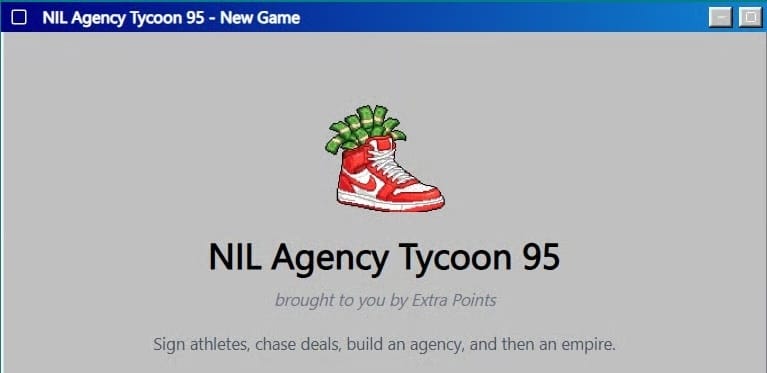
This week, Extra Points announced a new addition to its free game library: NIL Agency Tycoon 95.
The objective of the game: to build a college athlete representation empire. You try to pitch various athletes to become your clients, track down marketing gigs for them, negotiate contracts and finagle revenue sharing deals with collectives.
It’s a lot of resource management, and you have to juggle internal investments (new offices, marketing staff, NCAA certifications), athlete recruitment and the work it takes to pull off enough successful marketing campaigns with Division III baseball players to actually pay your rent.
THE BIG 3
High school NIL conquers more territory
And then there were four.
Michigan became the 46th state to allow high school athletes to profit from their name, image and likeness. The Michigan High School Athletic Association approved new bylaws this week, officially opening the door to expanded NIL rights and leaving just a handful of holdouts nationwide. (Wyoming appears to be next.)
Until now, Michigan high school athletes were limited to earning money through camps or clinics. That era is over. Under the new rules, athletes can sign personal endorsement deals with brands, as long as those agreements are disclosed to and approved by the MHSAA.
“We have said from the start of this conversation that the MHSAA could be comfortable with a policy that provides individual branding opportunities for individual student-athletes, while excluding the possibility of collectives, and boosters and school people getting involved,” MHSAA executive director Mark Uyl said in a statement.
That distinction matters. The new policy allows athletes to monetize things like social media endorsements, autograph signings and marketing appearances. What it doesn’t allow is for schools to solicit, arrange or negotiate deals on an athlete’s behalf, a safeguard designed to keep competitive balance intact and prevent NIL from becoming a recruiting weapon at the high school level.
Uyl called the rule change “the essence of what NIL was supposed to allow in the first place.” The state of Michigan is acknowledging reality while trying to preserve fairness. The MHSAA is giving athletes a chance to benefit from their own names without turning high school sports into a miniature version of the college NIL arms race.
We’ll find out how that balance holds. For now, Michigan has officially joined the modern NIL era, with guardrails firmly in place.
An unlikely critic of the transfer portal
“I think the portal is probably the single biggest problem that needs to be solved.”
That sounds like something Dabo Swinney or Tom Izzo might say. And they probably have uttered some version of those words since 2023. But that quote doesn’t belong to a coach.
It belongs to Jonathan Skrmetti.
Yes, that Jonathan Skrmetti — the Tennessee attorney general whose lawsuit against the NCAA helped usher in unlimited transfers.
Skrmetti gave a wide-ranging interview to USA Today this week, and he didn’t mince words. He called the transfer portal a “train wreck” and said it’s “sucking the life out of college sports.” And he argued that fixing the portal should be the single highest priority for the people in charge.
His critique sounds familiar to anyone who’s watched the modern offseason spiral into chaos. The portal has turned roster management into an endless free-agency free-for-all. It’s a sport unto itself, complete with rumor cycles, speculation and tampering whispers that feel closer to July in the NBA than college athletics. Coaching burnout has accelerated. And eventually, there will be real human consequences for players who bounce to four, five, six, even seven different schools.
Yet, Skrmetti doesn’t regret it. In his view, the old rules were flat-out illegal. Coaches have always been free to pack up and move wherever opportunity calls. Why shouldn’t players have the same freedom, especially with NIL dollars at stake? It’s easy to forget now, but not long ago, coaches could actively block athletes from transferring to certain schools! That world was never defensible.
“Tearing things down is sometimes necessary,” Skrmetti said. “But that’s never the end of the story.”
That line gets to the heart of the moment college sports finds itself in. The teardown is over. Now comes the hard part. Skrmetti argues that state attorneys general shouldn’t dictate the rebuild through courtrooms and injunctions. And he’s right. It needs to be a collective effort from all of the system’s stakeholders, including athletes.
The CSC is hiring, and the roles are … interesting
College Sports Commission CEO Brian Seeley said at the NCAA convention that enforcement was coming. The CSC’s hiring activity suggests that wasn’t just talk.
The CSC’s careers page shows an organization gearing up for real oversight. It is adding four enforcement-focused roles: an attorney, an investigator, an investigations analyst and an investigations counsel. For a group criticized for lacking teeth, this looks like a deliberate move toward credibility.
These new hires will concentrate on the most sensitive pressure points in the post-House era: the revenue-sharing cap, third-party NIL deals and roster limits. The absence of enforcement has fueled skepticism since the CSC’s formation. Despite being an enforcement entity by design, the commission has yet to demonstrate meaningful enforcement power.
Questions linger about its long-term stability. The participation agreement presented to power-conference schools, intended to bar lawsuits and challenges to CSC punishments, remains unsigned and unresolved, leaving the CSC’s authority on uncertain ground.
The staffing push is notable. Based in Tysons Corner, Virginia, the CSC currently employs 11 people. The addition of four employees would be a meaningful increase for an organization still in its infancy.
The attorney position pays $140,000 to $175,000, and the person in the role will focus on reviewing and analyzing third-party NIL agreements. The investigator role, with a salary range of $150,000 to $190,000, calls for law enforcement or investigative experience and lists interviews and the analysis of text messages, emails and social media posts as core responsibilities.
The investigations analyst position is the most junior role of the four, offering $60,000 to $80,000, and that person will assist with investigations related to revenue sharing, NIL deals and roster compliance. The investigations counsel position carries a salary range of $150,000 to $220,000 and seeks candidates with prosecutorial or regulatory enforcement backgrounds. That counsel will help design and execute investigative strategies to determine whether programs are operating outside the boundaries of the House settlement.
Whether this hiring spree marks a true turning point remains to be seen. But the CSC is positioning itself as an enforcement body that intends to finally act.
VIDEO OF THE WEEK
The D-III receiver turning heads at the Senior Bowl
The Senior Bowl always produces out-of-nowhere stories. This year’s unexpected riser is wide receiver Tyren Montgomery, the only Division III player who was invited. He didn’t start playing football until his junior year … of college.
Montgomery was a basketball walk-on at LSU before embarking on a football career that took him to John Carroll University outside of Cleveland. Now, he could be a third-round draft pick. That could equal more than $6 million.
Say Goodbye to Meal Prep Burnout

After a long day, the last thing most of us want is another hour in the kitchen. But takeout and frozen “healthy” meals? They usually come with seed oils and ingredients that don’t leave you feeling great.
That’s where Forkful Meals comes in—chef-prepared meals cooked in avocado oil, made with grass-fed meats, wild-caught seafood, and organic produce. From protein-packed pasta to plant-based burrito bowls, they’ve got options for every eater.
And the best part? Everything arrives fresh, heats up in minutes, and makes healthy eating feel effortless.
Make weeknights simpler—and healthier. Get 50% off your first order today.
NIL BLITZ
♦️Alabama is one of a handful of states that don’t allow high school athletes to profit off their name, image and likeness. But that could change if one lawmaker has his way.
♦️Sen. Ted Cruz said it’s “absolutely critical” that any federal law related to college sports include a provision preventing athletes from becoming employees.
♦️ Georgia Tech athletic director Ryan Alpert shared that the football program’s 34 million TV viewers generated $200 million in ad equivalency value.
♦️ According to John Canzano, Clemson isn’t the only school impacted by Ole Miss tampering. The Rebels also contacted Fresno State WR Josiah Freeman. But unlike Clemson LB Luke Ferrelli, Freeman stayed at his school.
♦️ The Arkansas board of trustees passed a resolution providing an additional $15 million to athletics annually.
♦️ Oklahoma State is exploring the addition of men’s ice hockey.
♦️ LSU will strip students of their season tickets if they scan into the Pete Maravich Assembly Center for promotional giveaways but leave prior to tipoff.
Share NIL Wire
Have a friend or colleague who would enjoy NIL Wire? Share with them today!
You currently have 0 referrals.
BATTER UP
Today’s Poll Question:
Do Blue Bloods still rule college sports? |
Last Edition’s Poll Results:
What would be the best date for the CFP national championship game?
New Year’s Day - 57.6%
Second week of January - 30.5%
Third week of January - 8.5%
Fourth week of January - 3.4%
“I think the portal is probably the single biggest problem that needs to be solved.”