- NIL Wire
- Posts
- NIL isn’t just about money. It’s about lifestyle too.
NIL isn’t just about money. It’s about lifestyle too.
Inside the luxury apartment life at Duke
Good morning, folks.
Hope you’re enjoying the awesome slate of games we’ve been treated to in the Sweet 16. Let’s hope the Elite Eight is even better. Until then, read about the high life some Duke players live, Geno’s Title IX worries and how two small NIL deals with UGA women’s athletes could lead to a precedent.
— Kyle
THE BIG 3
What NIL looks like: high-rise living in Durham, N.C.
These are the NIL stories that grab my attention. Not the six- or seven-figure endorsement checks. We hear about those all the time. The real intrigue is the perks and lifestyle upgrades that have redefined what it means to be a college athlete.
Which is why I perked up when I read what Axios Raleigh wrote about Duke basketball players Maliq Brown and Caleb Foster living in Durham’s most high-end apartment building. It’s something that would have been completely out of bounds before NIL. Now, it’s part of the new normal.
“We’re all happy to be there,” Brown said. “We couldn’t pass it up.”
It’s not hard to see why. We’re talking about a 27-story luxury tower loaded with amenities: co-working spaces, a cabana-lined pool, an infinity-style hot tub, golf simulators, an outdoor movie theater, a pickleball court. There’s a full slate of wellness perks, including steam rooms, cold plunge pools and high-end fitness areas that look more like something you’d see in an NBA training facility than student housing. This isn’t your traditional off-campus housing.
The price tag reflects that. One-bedroom units start around $2,000 a month, while two-bedroom apartments climb north of $4,000. Some condos in the building have sold for more than $1 million, including a penthouse that fetched a state-record $5.25 million. The median rent in Durham is $1,265.
According to the building’s ownership, players are paying their rent through a mix of scholarship housing stipends and NIL earnings. Developers and property managers are increasingly aware of the value college athletes bring – not just as tenants, but as brand amplifiers tied to powerhouse programs with massive followings and deep-pocketed alumni bases.
“To have something like that in Durham is a really great thing,” said Davis Beischer, Duke’s director of basketball operations.
NIL isn’t just changing how athletes get paid – it’s changing how they live.
Geno Auriemma thinks Title IX is losing its grip on college sports
Geno Auriemma isn’t convinced Title IX still has real teeth in today’s college sports landscape. Auriemma said this week that the landmark gender equity law is “pretty much out the window,” pointing to the sport’s rapidly shifting financial model.
At issue is the influx of money into college athletics. With schools sharing millions in revenue directly with athletes, Auriemma questioned whether women’s sports will receive equitable funding, especially with football and men’s basketball siphoning off a vast majority of the funding.
Title IX was designed to ensure equal opportunities for men and women in education and athletics. But recent policy changes, including actions under Donald Trump that rolled back federal guidance on equal distribution of athlete payments, have raised concerns that women’s sports will be adversely impacted. Auriemma suggested that ensuring fairness may now depend less on federal oversight and more on decisions made by conferences and athletic departments.
Beyond equity, he also criticized aspects of the women’s NCAA tournament structure, including the use of two-site regionals and the idea of neutral-site early rounds, arguing that campus games better support attendance and atmosphere. As college sports enters a more professionalized era, the systems designed to ensure fairness are struggling to keep up.
Two tiny NIL deals, one potential massive problem
Who would have guessed that two payments – each worth less than $5,000 – could put the entire NIL ecosystem on edge?
A pair of Georgia female athletes are now at the center of a potentially precedent-setting dispute, one that could ripple far beyond Athens. Their situation mirrors a separate arbitration case involving several Nebraska football players. At the heart of the issue is a deal backed by a major public corporation and facilitated through Learfield. According to Ross Dellenger, the agreement was rejected by the College Sports Commission because it exceeded its “range of compensation value.”
Fair-market value is quickly becoming one of the most contested ideas in the NIL era. What makes this moment especially interesting is the sudden shift in perception around the CSC. For months, critics argued the CSC lacked enforcement power. Now, the narrative has flipped. The CSC is being accused of having too much bite, of overcorrecting and inserting itself too aggressively into deals between athletes and third parties. It’s a sharp turn, and an ironic one.
If the athletes prevail in arbitration, the implications could be significant. Expect a surge in third-party NIL activity, especially involving MMR companies. Schools may grow bolder. And it would challenge the CSC’s authority at a foundational level. If fair-market value proves difficult to enforce in arbitration, the entire premise of NIL oversight becomes murkier.
What’s striking is how little money has triggered this case. We’re talking about modest sums for non-marquee athletes. But in many ways, these cases aren’t about the money at all. They’re about control, precedent and the ongoing struggle to define what NIL is supposed to be. Depending on how arbitration unfolds, those two small payments might end up carrying outsized consequences for the future of college sports.
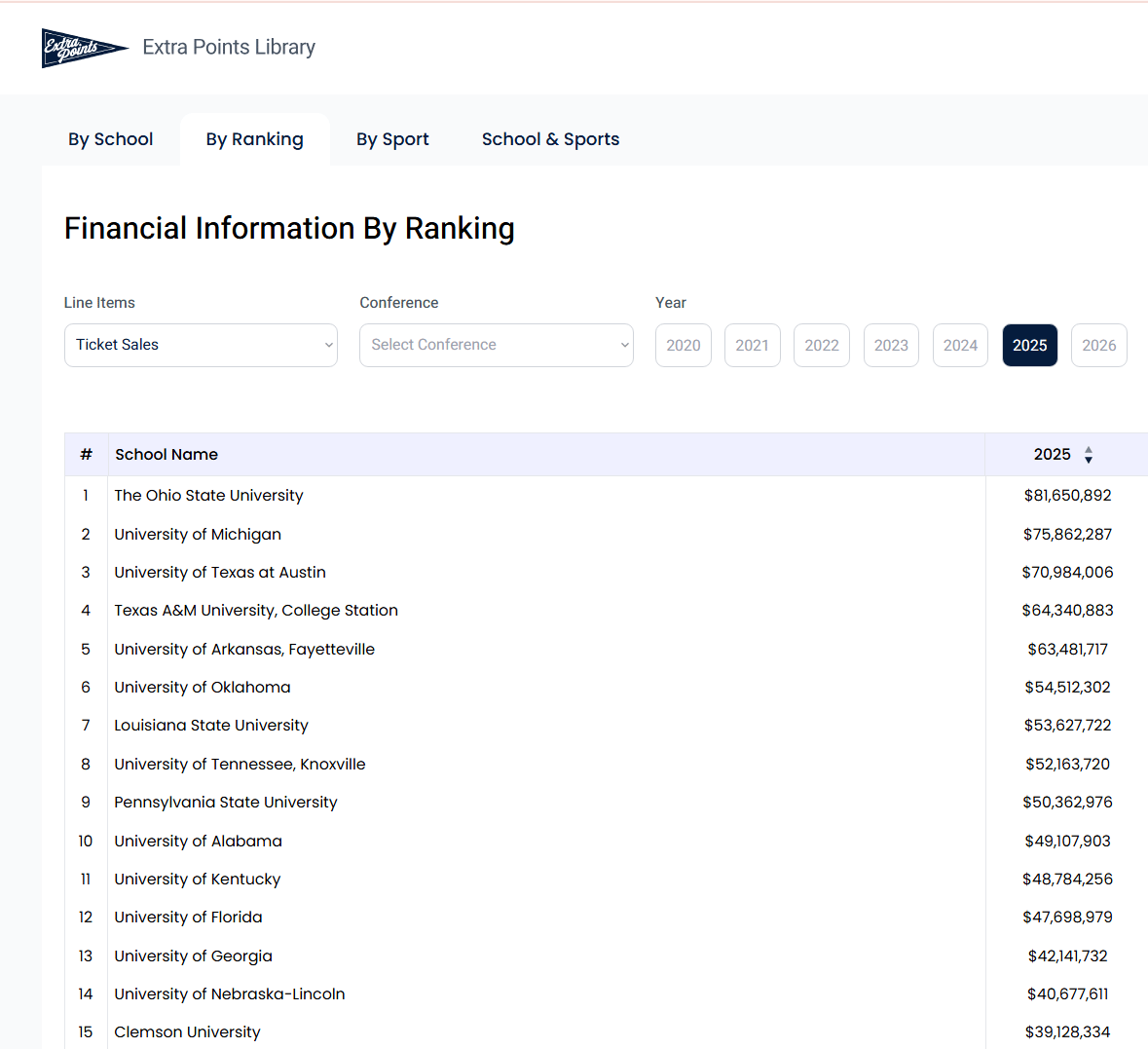
If you’re looking to get the most accurate, affordable college sports data, check out the Extra Points Library:
The Extra Points Library has more than 11,000 PDFs, from athletic director and coach contracts, to itemized athletic department budgets, sample revenue sharing contracts, GM contracts, vendor deals, and much, much more. It’s already become a leading industry toolkit for athletic departments, law firms, agencies, and more. If you’re looking for an affordable solution to your data needs, check out Extra Points Library today.
VIDEO OF THE WEEK
Money makes the world go round
Mick Cronin didn’t mince words when asked what UCLA needs in the offseason. He followed up on it later in the week, comparing how much UCLA and UConn each spend on football.
NIL BLITZ
♦️ Adam Rittenberg of ESPN has a great story on how NIL and revenue sharing are impacting college hockey programs.
♦️ No. 1 Notre Dame and No. 2 Richmond play in the college lacrosse game of the season. And the game almost went untelevised.
♦️ Momentum is strong to make Week 0 the first full week of college football games for the 2027 season.
♦️ Oregon State athletic director Scott Barnes will resign at the end of August and transition into a senior advisor role at the university.
♦️ Georgia State unveiled a five-year athletics plan that includes a commitment to expand its NIL resources.
♦️ It’s not all bad news for San Diego State. Despite its men’s basketball team missing out on the NCAA tournament, the Aztecs are expected to make $200,000 on hosting the first and second rounds.
♦️ Fresno State is working on a feasibility study for stadium renovations to 45-year-old Valley Children’s Stadium.
Share NIL Wire
Have a friend or colleague who would enjoy NIL Wire? Share with them today!
You currently have 0 referrals.
BATTER UP
Today’s Poll Question:
What is your favorite round of the NCAA tournament? |
Last Edition’s Poll Results:
If the College Football Playoff expands, what should happen to bowl games?
Integrate them into the playoff - 41%
Reduce the number of bowl significantly - 35%
Keep the current bowl system seperate from the playoff - 24%
“Title IX legislation is probably over.”