- NIL Wire
- Posts
- The high school that cashes in big on Michigan football games
The high school that cashes in big on Michigan football games
At Pioneer High in Ann Arbor, every Wolverines home game brings in whopping amount of extra revenue ... thanks to 3,500 premier parking spots.
Hey there,
I hope everyone had a great holiday weekend. Ohio State and LSU fans sure did! Michigan and Ole Miss faithful not so much 😧.
In today’s newsletter, we have details on yet another college sports bill and a rundown of one of the most unique parking setups in college football. (Yep: Parking!) Read on for the latest news from around the NIL world.
Do you follow us on Twitter, Instagram, TikTok and Facebook? You should! Click to stay updated on all your social channels. We’d also love to hear feedback on anything and everything about our newsletter. Hit reply or send us an email at [email protected].
— Kyle
Turn fan NIL support into real financial clarity with Fundraise
Schools are starting to see that the most reliable signals for donor intent, fan commitment and NIL participation all emerge at one place: the moment of purchase. Fans reveal more in those five seconds than months of campaigns ever could.
When universities experiment with NIL fees, optional contributions or loyalty multipliers, the checkout becomes a funding blueprint. But only if the system underneath can carry the load. That means clear labels, clean routing, separate receipts, correct tax rules, flexible presets and full visibility for finance and compliance. Most platforms were never built for that level of control.
This is where Fundraise changes the dynamic. It lets you configure NIL flows with the same precision you expect from your foundation. Map every contribution to the right fund, trigger acknowledgments instantly, mirror donor tiers, and sync everything into CRM and BI without manual intervention. Fans get clarity, departments get accuracy, and leaders get a real view of NIL’s financial impact.
Early adopters are already measuring the lift: higher order values, stronger donor identification and new NIL-driven revenue streams that scale cleanly across sports.
KICKOFF
Hey, look, another college sports bill
Exciting news! There’s another bill that’s going to fix college sports!
OK, maybe not. But on Tuesday, Rep. Lori Trahan, a Democrat from Massachusetts, will introduce the College Athletics Reform Act, which would establish a federal NIL policy, create a bipartisan commission to review college sports governance, amend the Sports Broadcasting Act of 1961 and enhance opportunities for women and minorities.
Trahan wants to stabilize college athletics and protect athletes’ rights. The bill is a direct response to the SCORE Act, which the House of Representatives is slated to vote on this week.
The NFL, NBA, MLB, NHL and MLB Players Associations are backing Trahan’s bill.
“Despite years of intense lobbying from the most powerful institutions in college athletics, Congress is increasingly divided on how to address the challenges threatening the industry,” Trahan said in a written statement. “Too many proposals pushed by entrenched power brokers focus on regaining control at the expense of the athletes who drive college sports, rather than on creating a sustainable system, particularly for women’s and Olympic sports and smaller schools.
“The College Athletics Reform Act recognizes that divide. It offers a clear, bipartisan path forward to tackle the toughest questions facing college sports and to build a stronger system for every athlete, every team, and every school.”
CARA, if passed, would mark the end of the College Sports Commission and kill the House settlement. The bill would prohibit the NCAA and CSC from restricting athletes from receiving NIL money, and it would prevent athletes from being required to disclose NIL deals. International athletes would be given the same ability to profit off their name, image and likeness as U.S.-born athletes.
Athletes and states would be able to sue to enforce violations of the bill.
VIDEO OF THE WEEK
What a sport
So much about the two-week Lane Kiffin saga represented everything that’s wrong with college football. Kiffin’s narcissistic personality took center stage as he extended the process in an attempt to control Ole Miss and the narrative, despite choosing to move on to a hated rival for nearly $100 million with a playoff berth assured.
The language — verbal and sign — may have been too colorful for some, but the scene at Oxford’s tiny airport Sunday was everything right about college football: passion and community. Professional sports are fantastic. We just saw a classic World Series. The Super Bowl is a global event. But, man, what we witnessed Saturday in Mississippi shows why we love college sports.
People hold their favorite college teams near and dear. Jilting them produces an irrational fanaticism that’s rare in other sports. College sports reside deep in the soul.
DOWN TO BUSINESS
The most valuable high school parking lot in the country
Cars began rolling into the Pioneer High School parking lot before sunrise on Saturday.
No, it wasn’t an early-morning punishment for students. And teachers weren’t working overtime after missing a few days for Thanksgiving.
The cars were packed with Michigan and Ohio State fans arriving for the greatest rivalry in sports. Pioneer, located at the corner of Stadium and Main in Ann Arbor, Michigan, happens to sit on one of the most valuable pieces of real estate in college football. There’s very little parking available near the stadium on UM grounds, and 90 percent of parking spots for fans attending Michigan’s home games are spread between a high school, two golf courses and people’s yards.
Pioneer’s 3,500 parking spots are the school district’s asphalt gold mine.
“As you may imagine, with school funding, every dollar that we can get is a great thing,” said Andrew Cluley, the director of communications for Ann Arbor Public Schools. He’s a bit of a Michigan parking expert, having previously parked cars in his Ann Arbor yard.
The district is expected to make $1.2 million on Michigan’s six-game home schedule this season, which will be deposited into the Ann Arbor Public Schools’ general fund. (About 20 percent of the revenue goes to LAZ Parking, the vendor that operates the lot for events. The previous vendor, Michigan Event Parking, only received 10.9 percent of the total windfall. Ann Arbor Public Schools signed the deal with LAZ Parking in 2021.)
Pioneer’s unusual but lucrative role in Ann Arbor’s Saturday-in-the-fall economy goes back nearly three-quarters of a century. The University of Michigan originally owned the land and sold it to Ann Arbor Public Schools for $135,000 in 1953. Three years later, Pioneer opened.
The terms of the land sale included an agreement that cars would park at Pioneer on game days.
The district has a $300 million budget, so $1 million isn’t a difference-maker. But it’s still an added source of income. The lot is also used for basketball games and graduations. And as Michigan’s athletic department experiments with new revenue streams like international soccer friendlies, mega concerts and whatever else can fit inside the Big House, Ann Arbor Public Schools is a beneficiary.
The Zach Bryan concert in September broke the U.S. record for the largest ticketed concert attendance with 112,408 people. And Pioneer’s parking lot overflowed, with spots going for between $90 and $120.
“That ended up being a very good day for parking,” Cluley said. “And we already know that next summer, Morgan Wallen is going to have a couple of shows in July.”
For the 2025 football season, a parking pass at Pioneer cost just under $470. Day-of-game parking fluctuated between $80 and $100. As prices have crept up, criticism has been voiced. (In 2022, the city of Ann Arbor banned RV parking at Pioneer, citing the city’s fire code.) But LAZ Parking, and Michigan Event Parking before them, have been quick to point out where a bulk of the money goes: to Ann Arbor Public Schools. This isn’t a get-rich-quick scheme.
Winning impacts the bottom line. In 2012, 2013 and 2014 — the three years before Jim Harbaugh was hired — the Pioneer lot made $2.6 million over 20 home games, an average of $130,000 per game. The largest year-over-year discrepancy came in 2014 and 2015, the end of the Brady Hoke era and the beginning of Harbaugh’s run.
Michigan had seven home games both seasons, but the Pioneer lot only netted $745,740 in 2014 compared to more than $1 million in 2015. The 2014 season also marked the end of Michigan’s 16-year run of leading the nation in attendance. The Wolverines averaged 104,909 that fall, a decline of 6,683 fans from the previous year. Attendance climbed to 110,168 in 2015.
Cleaning the lot after games takes between four and eight hours. The lack of RVs has helped speed up the process — and made it cleaner. Horror stories involving bodily fluids have decreased in recent years. But Mother Nature, especially rain, presents a messy obstacle.
Michigan state law prohibits drinking alcohol on Pioneer’s campus. But police don’t use game days as an opportunity to ticket people. There are few tickets handed out. Instead, they single out unruly fans and underage drinking, two college football traditions that date back to the writing of “The Victors” and the creation of Michigan’s famed winged helmets. (A person was stabbed in the lot in an isolated incident on Saturday. The victim was last reported to be in stable condition.)
The parking situation for Michigan games is perhaps the most distinctive in college football. “I can’t think of a single [university] where the stadium is anywhere near a public school,” Cluley said. “We have a pretty unique situation.”
More news and links:
The Columbia Missourian detailed how Missouri football handles NIL contracts.
Dan Wolken of Yahoo Sports wrote a terrific column on the ugliness of the Lane Kiffin saga and put blame on the adults, not the players, for college football’s most urgent issues.
Baylor president Linda Livingstone discussed the decision to stick with football coach Dave Aranda.
Dayton basketball is reassessing its future scheduling philosophy regarding MTEs. Schools now want to make money in the revenue-sharing era, not spend money to play games.
Here’s an interesting look behind the curtain at Tennessee’s NIL negotiations.
ATHLETE SPOTLIGHT
Successful QBs cash in
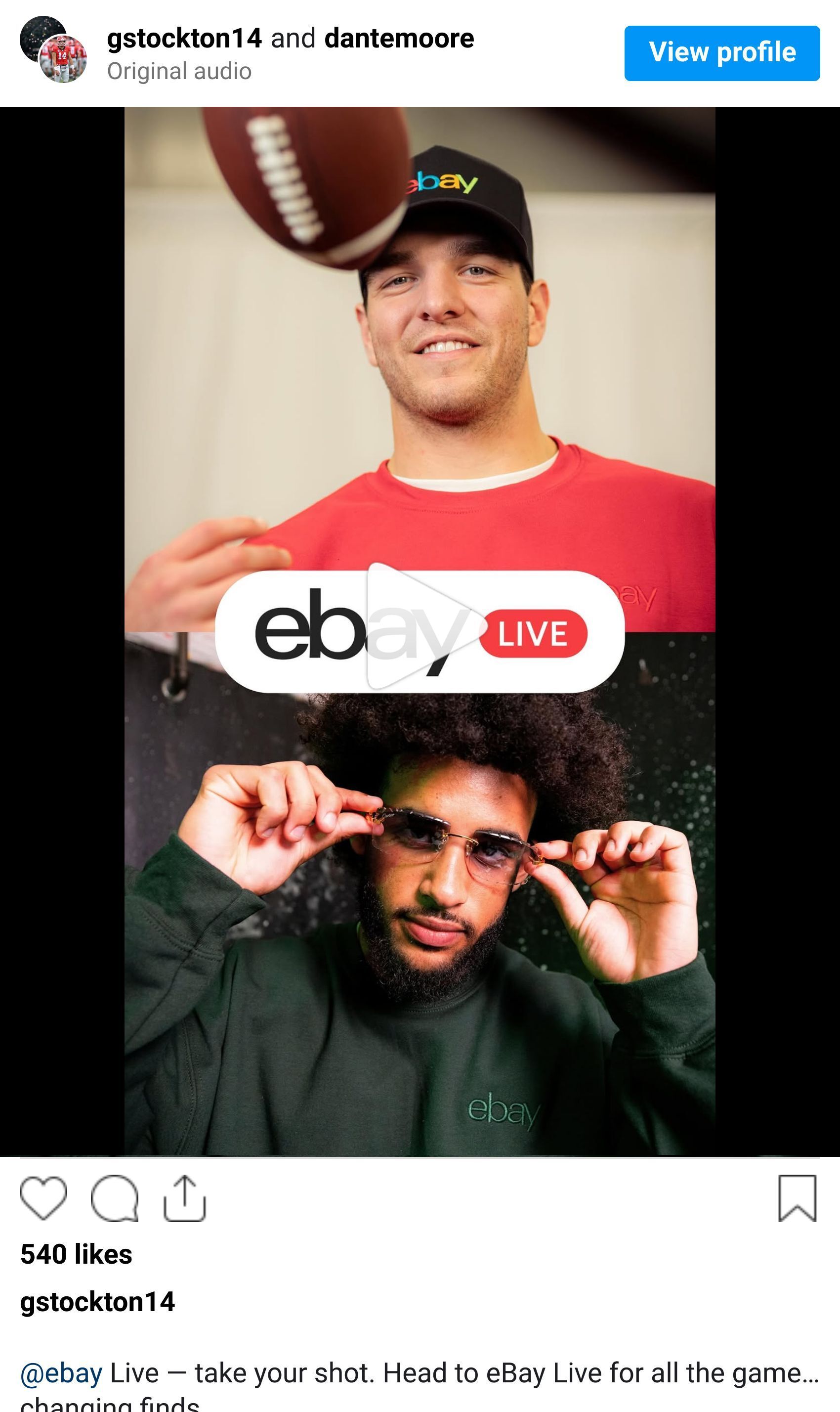
The quickest way to NIL riches in college is to be a winning quarterback. Just ask Oregon’s Dante Moore and Georgia’s Gunner Stockton. The duo had question marks entering the season, but not anymore.
Oregon and Georgia are two of the hottest teams in the country, thanks to their QBs. And the NIL deals keep flowing in. Both schools will be near the top of the rankings next year, regardless of this season’s outcome, because of Moore and Stockton. They’ll spend the offseason counting their money.