- NIL Wire
- Posts
- Trump promises order. But his executive order delivers more chaos.
Trump promises order. But his executive order delivers more chaos.
Federal power meets college sports — and it’s a mess
Good morning.
Before we get to the newsletter, let’s get an update on our Bracket Challenge:
Short Courts makes beautiful and authentic framed replica courts and football fields, perfect for your donors, fans and fundraisers. Designed to celebrate your program and thank the people who make it possible, Short Courts are handcrafted and customizable for any occasion. Check out examples courts and fields here. |
Here are your winners! |
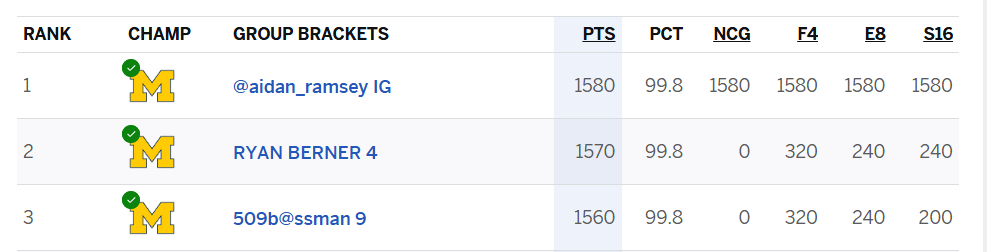
If you are one of these three brackets, please email [email protected] so we can get you your prizes! |
KICKOFF
International talent is changing college basketball.
If you watched this past college basketball season with a critical eye, one theme stood out. And by the time the Final Four arrived, it was impossible to ignore: college basketball has gone global.
This isn’t just a sprinkle of international talent anymore. It’s a full-on shift in how top programs build rosters. In many ways, college basketball is starting to mirror the NBA, where global pipelines have long been essential. Look no further than Illinois. Head coach Brad Underwood leaned all the way in, starting five players from the Balkans. The group brought cohesion that comes from growing up in structured European systems.
Other contenders followed a similar blueprint. Arizona featured starters from Germany and Lithuania. Michigan added a Spanish prospect. UConn relied on multiple international players off the bench.
So why the surge now? Part of the answer lies in NCAA eligibility rules. International players can compete in college, even if they’ve previously played professionally overseas, a common path in Europe, where athletes develop in club systems from a young age. By the time they arrive in the US, many are already fundamentally sound and game-ready.
But eligibility alone doesn’t explain the boom. The real catalyst has been money. With NIL and revenue sharing, college basketball has become more financially appealing to international prospects. But international athletes typically enter the US on student visas, which come with strict limitations on income. And right now, there’s little clear federal guidance on how NIL deals or direct payments from schools fit into those restrictions. The consequences for getting it wrong are serious, ranging from visa violations to potential deportation.
Still, many players are willing to navigate that uncertainty for the chance to compete at the highest level of college basketball. Programs are searching for legal workarounds. One widely discussed approach is structuring payments as “royalties,” compensating athletes for the use of their NIL rather than for playing basketball or doing “active” promotional work. Because royalty income is generally allowed under student visa rules, some legal experts see this as a viable path.
Others aren’t so sure. Critics argue that if payments are ultimately tied to on-court performance, rebranding them as royalties may not hold up under scrutiny. If anything, the visibility of global talent on college basketball’s biggest stage will only accelerate the trend. For programs, international recruiting is no longer optional. And for players around the world, the message is clear: college basketball is open for business.
G6 vs. P4: College football’s talent gap widens
Even after two Group of Six programs broke into the playoff last season, new data from the 2026 transfer cycle suggests the divide between college football’s top tier and the rest is growing wider.
A closer look by CBS Sports at returning all-conference players highlights the imbalance. Among G6 players who earned first- or second-team honors and came back for 2026, fewer than one-third stayed with their original teams. The majority entered the transfer portal, and almost all of those players landed with power conference programs. By contrast, nearly three-quarters of all-conference players from Power Four schools chose to remain where they were.
The gap becomes even more striking when isolating first-team selections. Only about a quarter of G6 standouts stayed put, while more than 80 percent of P4 stars remained with their teams. Money – duh! – is at the center of this shift. P4 programs now operate with massive budgets fueled by revenue-sharing and NIL opportunities. Championship contenders cost between $30 million and $40 million. G6 programs operate with a small fraction of that. The financial reality leaves even strong G6 programs vulnerable.
There’s even a contrast among P4 conferences. The SEC and Big Ten rarely lost their best players this cycle, while the ACC and Big 12 saw multiple top performers depart. Movement isn’t limited to conference-to-conference jumps. Internal disparities are growing as certain schools within leagues spend aggressively to separate themselves.
Nearly half of all-conference players in the G6 and over 40 percent in the P4 began their careers elsewhere. Every conference now relies heavily on transfers to build competitive teams.
From Rooms to Revenue: The New Frontier in College Sports Funding
In the ever-expanding world of college athletics revenue generation, here’s a new one to keep an eye on: travel.
ScoreMore – a platform developed by Nonprofit Trips – announced a partnership with Marshall athletics to launch HerdHotels.com, a dedicated hotel booking site designed to turn everyday travel into direct financial support for the Thundering Herd.
The concept is simple, and clever. Fans book hotels the same way they normally would, whether it’s for a road game, a family vacation, or a work trip, but instead of commissions going entirely to traditional travel sites, 50 percent of all proceeds from bookings go directly to support Marshall’s athletes.
“Marshall fans are known for their incredible loyalty,” said Ryan Crisp, the school’s Associate Director of Athletics for Revenue Generation. “HerdHotels.com gives them a simple way to turn their everyday travel into meaningful support.”
This is another example of how athletic departments, especially those outside the sport’s financial elite, are getting more creative in the NIL and revenue-sharing era. Traditional donor models still matter, but schools are increasingly looking for passive revenue streams that don’t require fans to dig deeper into their pockets.
Marshall is the first athletic department in the country to partner with ScoreMore, effectively serving as a test case for a model that could scale quickly if it works. The platform offers access to global hotel inventory with pricing comparable to major booking sites, so the user experience doesn’t change. The backend economics do.
ScoreMore was founded by travel and tech entrepreneurs Clay Burdelik and Daniel Litvak, with a specific focus on helping colleges and mission-driven organizations capture revenue that would otherwise be lost to third-party booking platforms.
The initiative will be overseen by Marshall’s newly formed Herd Hospitality department, which is tasked with blending revenue generation and fan experience into a more unified strategy. Zoom out, and this fits squarely into where college sports is heading. The schools that figure out how to monetize fan engagement in seamless, low-friction ways are the ones best positioned to keep up in an increasingly expensive landscape.
Don’t be surprised if booking a hotel becomes just another way fans feel like they’re contributing on game day – even if they’re hundreds of miles away.
More news and links:
Dan Wolken of Yahoo Sports has a fascinating look at Arizona walk-on Jackson Francois, the son of Arizona AD Desiree Reed-Francois and an intern for super agent Jimmy Sexton.
Pat Forde examines the continued increase in online harassment of athletes by sports bettors.
Here’s a priceless college sports moment: Kent State’s football players — in full pads — showed up to a softball game last weekend.
NCAA president Charlie Baker defended the two-regional setup for the women’s tournament.
Outdoor hockey could be coming to Bowling Green.
DOWN TO BUSINESS
College sports needed reform. This isn’t it.
College sports has been living in chaos for a while now. But the latest move from Donald Trump suggests things might get even more complicated before they settle down.
Late last week, just hours before one of the biggest weekends on the calendar, Trump signed an executive order aimed at, in his view, “fixing” college athletics. Unlike the usual political talking points around this space, this one came with real teeth: schools that fail to comply with whatever new rules emerge could risk losing federal funding. For universities already navigating tight budgets and rising athletic costs, that’s not a small threat.
The order tries to bring structure to familiar problems: eligibility rules, the transfer portal and the explosion of money through NIL and revenue-sharing. It proposes a defined five-year window to compete and limits on transfers, essentially one “free” move, with another tied to earning a degree. That might sound like stability, but it collides directly with recent legal victories that have expanded athlete freedom.
And that’s where things start to unravel. College sports isn’t governed by a single authority. The NCAA, major conferences, smaller leagues, the College Sports Commission and hundreds of schools all operate with different priorities. The fragmentation is exactly why Congress has struggled to pass a comprehensive solution. Even lawmakers like Maria Cantwell have emphasized that real reform likely has to come through legislation, not unilateral executive action.
Critics have been even more blunt. Richard Blumenthal dismissed the order as “theater,” arguing that meaningful change requires bipartisan lawmaking, not a top-down directive. He and others have pushed proposals like the SAFE Act to create a national NIL framework and clearer protections for athletes, steps that would address root issues rather than impose quick fixes.
The legal reality looms large. Courts have already reshaped the system, from NIL rights to transfer rules. Trying to reverse that momentum almost guarantees lawsuits. Schools are now stuck in an impossible position – follow an executive order or follow existing court rulings. Either way, they risk ending up in court.
There are financial ripple effects. The order addresses revenue-sharing and seeks to protect Olympic sports programs, which risk being squeezed as spending on football and basketball grows. But tying enforcement to federal funding raises the stakes dramatically, giving the government leverage over universities in ways that extend far beyond athletics.
Even figures within the system acknowledge the limits of this approach. NCAA president Charlie Baker has made clear that only congressional action can truly “seal the deal.” An executive order might spark momentum, but it can’t stabilize something this complex on its own.
So where does that leave college sports? In a familiar place – caught between urgency and uncertainty. Most people agree that the current model isn’t sustainable. The money is too big, the rules too inconsistent and the balance increasingly fragile. But this move doesn’t resolve that tension, it intensifies it.
It adds another layer to an already tangled system, reinforcing a simple truth: the future of college sports won’t just be decided on the field. It will be shaped in courtrooms, congressional hearings and negotiations that are far from over.